















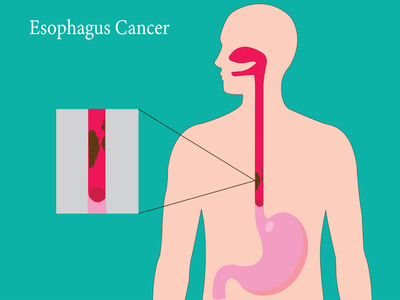
Esophageal cancer occurs when the cells in the lining of your esophagus become cancerous or malignant. Your esophagus is the muscular tube that carries food from your mouth and throat to your stomach. Cancer can begin in any part of this tube, leading to narrowing of the esophagus.
UPMC experts deliver an accurate diagnosis and personalized surgical and nonsurgical treatments for esophageal cancer and related complications. Our multidisciplinary team includes surgeons, gastroenterologists, and oncologists who work together to prevent complications, improve your quality of life, and provide you with comprehensive esophageal cancer treatment.
On this page:
What Is Esophageal Cancer?
Esophageal cancer occurs when the cells in the lining of your esophagus become malignant or cancerous. Your esophagus is the muscular tube that carries food from your mouth and throat to your stomach. Cancer can begin in any part of this tube, causing narrowing of your esophagus.
What are the types of esophageal cancer?
There are two types of esophageal cancer:
- Adenocarcinoma — The most common type of esophageal cancer in the United States and developed countries. It occurs in the middle and lower third of your esophagus. Patients with a condition known as Barrett's esophagus, which causes cells to transform into a different type of tissue, are at a greater risk of developing esophageal adenocarcinoma.
- Squamous cell carcinoma — The second most common type of esophageal cancer. It's commonly related to smoking and alcohol intake. It's usually located in the upper to mid esophagus.
How common is esophageal cancer?
According to the American Cancer Society, esophageal cancer makes up about 1.1% of all cancers diagnosed. Each year in the United States, approximately 22,000 cases of esophageal cancer are diagnosed. It is more common in men than in women.
What causes esophageal cancer?
The exact cause of esophageal cancer is unknown.
However, there are factors that may contribute to the disease, including:
- Alcoholism.
- Being caucasian.
- Being male.
- GERD/gastroesophageal reflux disease.
- History of Barrett's esophagus.
- Obesity.
- Smoking.
Esophageal cancer risk factors
There are several lifestyle habits and health conditions that increase your risk of developing esophageal cancer, including:
- Alcohol intake.
- Barrett's esophagus.
- GERD/gastroesophageal reflux disease.
- Obesity.
- Smoking.
Complications of esophageal cancer include:
- Abdominal pain.
- Anemia/low blood counts.
- Blood in your stool.
- Coughing or throwing up blood.
- Trouble swallowing.
- Weight loss.
How can I prevent esophageal cancer?
You may not be able to completely prevent esophageal cancer.
However, you can take steps to reduce your risk, including:
- If you have reflux and/or trouble swallowing, get an upper endoscopy (EGD).
- Smoking cessation.
- Limit alcohol intake.
- If you have Barrett's esophagus, get a regular surveillance endoscopy.
- If you're obese, work on losing weight.
What Are the Signs and Symptoms of Esophageal Cancer?
Signs of esophageal cancer are often hard to detect in the early stages of the disease. Many people don’t have symptoms initially or may only have mild symptoms, causing esophageal cancer to often remain undiagnosed until it reaches an advanced stage.
As the disease progresses, esophageal cancer symptoms may include:
- Trouble swallowing.
- Food regurgitation.
- Painful swallowing.
- Chest or epigastric pain with or after eating.
- Weight loss.
- Coughing up or throwing up blood.
- Worsening heartburn.
- Loss of appetite.
- Hoarse voice.
- Enlarged lymph nodes in the neck.
When should I see a doctor about my esophageal cancer symptoms?
Esophageal cancer can sometimes be difficult to detect. If you experience any symptoms of esophageal cancer, you should contact your doctor right away. Esophageal cancer can be more successfully treated if it is diagnosed in its early stages, before it spreads to other areas of your body.
How Do You Diagnose Esophageal Cancer?
Your doctor may suspect you have esophageal cancer based on your symptoms and may order testing to confirm the diagnosis.
What to expect during your visit
If your doctor suspects esophageal cancer, they will:
- Ask about your symptoms.
- Order other tests.
- Perform a physical exam.
- Review your health history and medications.
Tests to diagnose esophageal cancer
Accurate diagnosis is essential to the successful treatment of esophageal cancer.
The physicians at UPMC may use one or more of the following tests to determine if you have cancer, if your cancer has spread, or if your treatment is working:
- Swallowing study/upper GI (also known as an upper gastrointestinal swallow or barium swallow) — Your doctor may order this test to identify problems in your esophagus.
- Endoscopy — Your doctor may perform an endoscopy of your esophagus using a fiber optic camera to look directly at your esophagus and take biopsies at the same time. An endoscopic ultrasound, which uses sound waves to provide more information about the presence of cancer in nearby tissues, may also be used.
- CT/PET scan — Your doctor may order a CT scan of the chest or a PET scan to determine if cancer cells are present and if they have spread.
Esophageal cancer staging
If you are diagnosed with esophageal cancer, staging is a very important factor in developing a treatment plan. Your doctor will evaluate the type of esophageal cancer, the extent, and whether it has spread. Then, your doctor will assign an appropriate stage to help guide your treatment.
Esophageal cancer prognosis
Your prognosis after an esophageal cancer diagnosis depends on numerous factors, including the type, stage, and extent of the cancer, whether it has spread, and your response to treatment. Your doctor will discuss your expected prognosis with you.
How Do You Treat Esophageal Cancer?
If you receive an esophageal cancer diagnosis, your team of UPMC physicians will shape a personalized treatment plan for you.
Your treatment plan will be based on:
- Your medical history.
- Your overall health.
- Your specific type of esophageal cancer.
- Your stage of esophageal cancer.
Treatment for esophageal cancer could include a combination of:
Surgery for esophageal cancer
Your doctor may recommend an esophagectomy, which involves removing a segment of your esophagus to treat esophageal cancer.
Early-stage esophageal cancer (stage 1a, 1b, 2a) may be treated with surgery alone. Later-stage esophageal cancer (stage 2b, 3) may also require chemotherapy and/or radiation prior to surgery.
Endoscopic resection for esophageal cancer
Your doctor may recommend a minimally invasive procedure called an endoscopic resection to treat early-stage (T1a), localized esophageal cancer.
Minimally invasive esophagectomy (MIE)
UPMC surgeons pioneered the minimally invasive esophagectomy (MIE) procedure, which can result in fewer complications, less pain, and a shorter hospital stay when compared to the traditional open esophagectomy procedure. During an MIE, a portion of the stomach is used to reconstruct the removed part of the esophagus. UPMC surgeons have performed more than 2,500 minimally invasive esophagectomies in the last two decades and are among the most experienced in the world at performing this procedure.
Robotic-assisted MIE
Your surgeon may perform your MIE with the assistance of robotic technology. UPMC surgeons are at the forefront of minimally invasive and robotic-assisted surgical techniques, with a long history of being leaders in this field.
Chemotherapy for esophageal cancer
Chemotherapy may be recommended to kill cancer cells. You may receive chemotherapy treatments through a vein in your arm or a pill. Chemotherapy is often used in combination with radiation and/or surgery.
Immunotherapy for esophageal cancer
Immunotherapy is an emerging treatment option for certain types of esophageal cancer, particularly in patients with advanced or metastatic disease. These therapies work by harnessing the body's immune system to recognize and attack cancer cells. Immune checkpoint inhibitors, such as PD-1/PD-L1 inhibitors, have shown promise in clinical trials and are now FDA-approved in select settings, including after prior chemotherapy or in tumors with specific biomarkers.
UPMC’s oncology team evaluates each patient for eligibility and potential benefit from immunotherapy based on tumor profiling and clinical criteria.
Biologic targeted therapy for esophageal cancer
Targeted therapies are designed to interfere with specific molecular pathways that drive cancer growth and progression. In esophageal cancer, biologic agents such as trastuzumab and trastuzumab deruxtecan (targeting HER2-positive tumors), zolbetuximab (targeting CLDN18.2-positive tumors), and ramucirumab (targeting VEGFR2) have demonstrated survival benefits. Other investigational agents are being explored in clinical trials, focusing on established and emerging biomarkers in various combinatorial approaches.
UPMC offers access to biomarker testing and provides innovative targeted therapies as part of standard care or in clinical trials.
Radiation therapy for esophageal cancer
Radiation therapy uses beams of energy to stop the growth of cancer cells. Radiation may be used in combination with chemotherapy and/or surgery.
Chemotherapy and radiation are utilized for more advanced stages of disease (stage 2b, stage 3, stage 4).
Palliative care for esophageal cancer
If your esophageal cancer is extensive or if you aren't able to undergo surgery, your physician may recommend palliative care to maximize your quality of life.
If you and your doctor decide that palliative care is right for you, a team of UPMC physicians, nurses, and other health care workers will help you and your family navigate any issues that arise after your cancer diagnosis.
Palliative esophageal stenting and feeding tubes
Your doctor may recommend a procedure called palliative esophageal stenting, which may help you swallow and tolerate a soft diet. For patients who can't swallow at all, a feeding tube can be used to provide direct access to your stomach.
Why Choose UPMC for Esophageal Cancer Care?
When you choose UPMC for esophageal cancer care, you will receive:
- Expert multidisciplinary care — Our team includes board-certified subspecialized gastrointestinal medical oncologists, thoracic surgeons, gastrointestinal surgeons, radiation oncologists, gastroenterologists, advanced endoscopists, pathologists, and supportive care providers. These experts collaborate to deliver precise, individualized treatment plans.
- Expert diagnosis and personalized care — Our team will develop a customized treatment plan to reduce the risk of complications and improve your quality of life.
- A full range of treatment options — We use the latest nonsurgical, minimally invasive, and surgical techniques to provide comprehensive care.
