Transportation is a significant contributor to UPMC’s carbon footprint. Addressing how people and goods move across the system remains a critical focus area for decarbonization and community health.
UPMC has a comprehensive strategy for transportation sustainability. It addresses several critical factors, including:
- Emergency transport
- Employee commuting
- Fleet vehicles
- Systemwide logistics
- Vendor deliveries
Strategic Focus Areas
Employee commuting and alternative transportation
UPMC encourages employees to shift away from single-occupancy, gas-powered vehicles by expanding access to alternative transportation options.
Our efforts include:
- Improving biking infrastructure.
- Promoting park-and-ride services.
- Supporting carpool and rideshare programs.
We're also collaborating with local partners to improve transit access and commuting infrastructure. Those partners include Pittsburgh Regional Transit, Bike Pittsburgh, and the University of Pittsburgh.
Employee surveys help us better understand commuting patterns. That helps us identify opportunities to reduce the emissions related to daily travel.
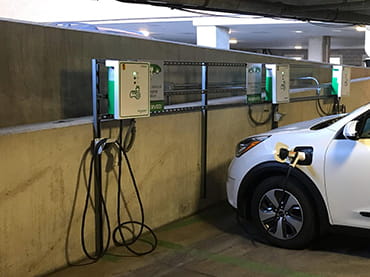
Electric vehicle (EV) charging infrastructure
UPMC continues to expand access to electric vehicle charging across our system to support staff, patients, visitors, and the community.
Telemedicine
UPMC has embedded telemedicine as a core care delivery strategy. This approach advances access to care and sustainability goals.
In 2024, UPMC delivered approximately 926,000 ambulatory telemedicine visits. This represented 9.7% of all ambulatory encounters and almost doubled the national average.
From a sustainability perspective, telemedicine is a high‑impact intervention. It reduces transportation‑related emissions, one of health care’s largest contributors to greenhouse gases.
Between January 2022 and August 2024, UPMC’s telehealth program reduced patient travel by more than 150 million miles. This directly lowered fuel use, air pollution, and associated carbon emissions. It also reduced patient time and out‑of‑pocket costs.
Telemedicine also minimizes unnecessary inter‑facility transfers. Finally, it supports rural and underserved communities by maintaining local access to specialty care.
Emergency and critical transport organization
UPMC is improving the efficiency of emergency transportation through data-driven optimization.
In partnership with the University of Pittsburgh Office of Sustainability in the Health Sciences, efforts are underway to optimize ambulance routing and medevac dispatch using advanced mathematical flight plan modeling.
These initiatives aim to:
- Reduce fuel use.
- Improve response efficiency.
- Lower emissions without compromising patient care.
Logistics and supply chain transportation
The UPMC Supply Chain team is working with vendors to optimize delivery logistics across the system.
This work focuses on:
- Reducing the number of trucks required.
- Improving route efficiency.
- Minimizing service delivery times for nonessential products.
These efforts result in more efficient operations and reduced transportation-related emissions.
Bike infrastructure
The University of Pittsburgh's campus bike map includes UPMC locations with bike racks and other amenities.