















Lyme disease is an infectious disease that people can contract through the bite of an infected deer tick. It can cause flu-like symptoms and a rash that may look like a bull's-eye. Without treatment, the infection can spread to your heart, joints, and nervous system.
The good news is that Lyme disease is very curable, especially if caught early. At UPMC, we treat Lyme disease with a variety of antibiotics.
On this page:
What Is Lyme Disease?
Lyme disease is an infectious disease caused by the bacterium Borrelia burgdorferi. People and some animals can contract Lyme disease through the bite of an infected deer tick. These ticks are commonly found in the eastern United States and in California.
Ticks climb onto people and pets when they’re outside in tall grass or on rocks and logs. When a tick bites someone, it feeds on their blood, transmitting bacteria and other germs that can cause illness.
Within a few days to a month after the tick bite, you may develop a rash that resembles a bull’s-eye. Other common early symptoms are fatigue, fever, and headache.
If you don’t recall a bite, you might trace your symptoms to when you last went camping or hiking. Deer ticks that carry Lyme-causing bacteria often cling to plants in grassy or wooded areas.
Two types of ticks transmit Lyme disease in the United States:
- Blacklegged or deer ticks (Ixodes scapularis) — These ticks are found throughout the eastern United States. They are the kind that carry Lyme disease in the Pennsylvania region.
- Western blacklegged ticks (Ixodes pacificus) — These ticks are found in California and along the West Coast.
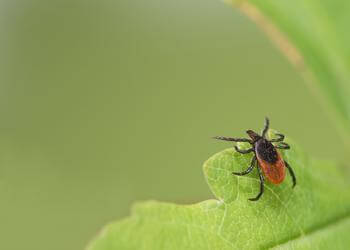
Not every tick you find will carry Lyme disease, and not every tick bite will transmit the bacteria — even if the tick is infected. An infected deer tick must be attached to and feed from a person or animal for at least 24 hours before it can transmit the Lyme disease-causing bacteria.
That’s why it’s so important to remove any attached tick as soon as possible to prevent potential transmission of the Lyme disease bacteria.
What are the stages of Lyme disease?
Without treatment, Lyme disease progresses through several stages.
Early infection
It takes more than 24 hours for an attached tick to transfer Lyme disease. Typical Lyme disease symptoms (rash and flu-like symptoms) may occur within a month after you’re infected.
Late disease
Several weeks to months after you've gotten infected, the rash may spread to other parts of the body. Nerve problems, joint pain, and heart issues may occur.
Post-Lyme disease syndrome
This condition happens when Lyme-like symptoms persist after the disease itself has been successfully treated. Current evidence suggests this happens when the immune system stays overactive even after the bacteria is gone. Since the bacteria are gone, long-term antibiotics are not indicated.
The symptoms of post-Lyme disease syndrome generally resolve on their own.
How common is Lyme disease?
Lyme disease is common. The Centers for Disease Control and Prevention (CDC) estimates about 476,000 people in the United States get treated for Lyme disease every year.
Lyme disease is more common in parts of the country where deer ticks are abundant. These areas include the:
- Mid-Atlantic.
- Northeast.
- Pacific coast, especially northern California.
- Upper Midwest.
In Pennsylvania, Lyme disease is one of the most common reportable infectious diseases. In fact, Pennsylvania has more cases of Lyme disease than almost any other state in the country — around 100,000 cases per year, or one case for every 100 people. Pennsylvania counts Lyme disease cases based on lab reports, which means the actual number is likely much higher.
View the Pennsylvania Department of Health’s Tickborne Diseases Dashboard to see how common Lyme disease is in your county in Pennsylvania.
What causes Lyme disease?
Lyme disease is caused by the bite of a deer tick that’s been infected with the Borrelia burgdorferi bacteria after feeding on an infected animal. As the tick grows, it stays infected and can transmit the Lyme disease bacteria to people and animals through its bite.
Ticks have different life stages: larva, nymph, and adult. Only nymphs and female adult blacklegged ticks can transmit Lyme.
Nymphs are most likely to spread Lyme disease because they are very small — about the size of a poppy seed — and can be hard to spot. Because people often don’t notice them right away, nymphs may stay attached longer, which increases the chance of infection.
Watch out for nymphs in the following places:
- During the spring and early summer, when they’re most active.
- In leaf litter and on rocks, logs, and tree trunks.
- Near fallen branches under trees in oak woodlands or other shaded natural areas.
Adult female blacklegged ticks also carry the Lyme disease bacteria.
Watch out for adults:
- From fall through early spring, when they’re most active.
- On the tips of tall grasses and shrubs, often along trails.
Deer ticks can attach to any part of your body. But they are often found in hard-to-see areas such as your groin, armpits, and scalp. Usually, the tick must attach for more than 24 hours to spread the disease.
However, not everyone who develops Lyme remembers a tick bite. That’s because tick bites are often painless. And if the tick latches on in a hidden area like the scalp or groin, you may not realize it’s there right away.
How does Lyme disease spread?
Lyme disease can only spread to humans through the bite of the blacklegged or deer tick. Blacklegged ticks are found in every county throughout Pennsylvania — even in the cityscapes.
Lyme disease risk factors
People who spend time outdoors in areas of the United States where blacklegged ticks are common are more likely to get Lyme disease.
You’re at greatest risk of being bitten by a tick in the spring, summer, and fall. However, any time winter temperatures are above freezing, adult ticks are out searching for hosts and could bite.
Those at highest risk include people who live, work, or adventure in, or those who travel to, these regions:
- Mid-Atlantic United States.
- Midwestern United States.
- Northeastern United States.
- Northern coastal region of California.
- Northern foothills of the Sierra Nevada in California.
- San Francisco Bay Area and the Central Coast of California .
According to the Centers for Disease Control and Prevention (CDC), Pennsylvania is one of 16 U.S. states deemed to have the highest incidence of Lyme disease. This designation means there has been an average incidence of at least 10 confirmed cases of the disease per 100,000 people in the state for three consecutive years.
You may also be at risk if:
- You have pets that go outdoors and could carry ticks into your home.
- You hike or walk near trees, shrubs, tall grass, or piles of leaves.
- You live in or near a wooded area.
- You spend time outside during the summer or fall when ticks are most active.
Complications of Lyme disease
Left untreated, Lyme disease can cause a variety of symptoms, depending on the stage of infection.
Complications of untreated Lyme disease include:
- Arthritis.
- Bell's palsy.
- Facial paralysis.
- Fever.
- Headaches and confusion.
- Heart palpitations.
- Impaired muscle movement.
- Irregular heartbeat.
- Joint pain, especially in the knees.
- Meningitis.
- Numbness or weakness in your limbs.
- Shortness of breath.
How can I prevent Lyme disease?
To reduce your risk of getting Lyme disease, the Pennsylvania Department of Health recommends that you:
Protect
Before you go outdoors, remember to:
- Avoid areas where ticks and mosquitoes are typically found, including wooded brushy areas with high grass and leaf litter and the edges of trails.
- Treat boots, clothing, and camping gear with 0.5% permethrin, which usually remains protective through several washings. Or buy permethrin-treated clothing and gear.
- Use an Environmental Protection Agency (EPA)-registered insect repellent containing DEET, IR 3535, Oil of Lemon Eucalyptus (OLE), paramenthane-diol (PMD), picaridin, or 2-undecanone. The EPA can help you find the right insect repellent for your needs.
- Wear light-colored, long-sleeve shirts and long pants.
Check
As soon as you come back inside:
- Check your body (and your child’s) for ticks — Conduct a full body check when you return from possible tick-infested areas. Use a handheld or full-length mirror to view your whole body. Starting with your head, check these spots carefully:
- In hair and around the hairline.
- In the armpits.
- Inside and around the ears.
- Inside the belly button.
- The backs of your knees.
- Around the waist.
- Between the legs.
- Check your clothing for ticks — Wash clothes in hot water and tumble-dry on high heat for 10 minutes to kill ticks.
- Check your pets and gear — Ticks like to hitch a ride on them and attach to people later.
- Take a shower as soon as possible — Showering within two hours of coming indoors can reduce your risk of getting Lyme disease.
Remove
If you see an attached tick, don’t freak out. Take a deep breath and prepare to remove it. Proper removal is vital to ensure you get the whole tick out with ripping it in the process.
You'll need a pair of fine-tipped tweezers to remove the tick. Don’t attempt to remove it with your bare hands.
To remove the tick, follow this procedure:
- With the tweezers, grasp the tick as close to the skin’s surface as possible. Pull upward with steady, even pressure. Don’t twist or jerk the tick, which can cause the mouth parts to break off and remain in the skin.
- If the mouth parts do break off, remove them with tweezers. If you cannot remove the mouth easily with tweezers, leave it alone and let the skin heal.
- After removing the tick, thoroughly clean the bite area and your hands with rubbing alcohol, soap, and water.
- Take a clear photo of the tick or save it in a plastic baggie for your doctor to test if you show signs of illness.
- Dispose of a live tick by submerging it in alcohol. You can also place it in a sealed bag or container, wrap it tightly in tape, or flush it down the toilet. Never crush a tick with your bare fingers.
Learn more about how to prevent Lyme disease and tick bites from UPMC HealthBeat.
Can my pets get Lyme disease?
Yes, dogs and farm animals can get Lyme disease. Dogs may be vaccinated for Lyme disease. Discuss the best tick and Lyme prevention products with your veterinarian.
What Are the Signs and Symptoms of Lyme Disease?
Lyme disease typically begins with a mild illness that can easily be mistaken for the flu. The disease has two stages — early and late — each with distinct signs and symptoms.
Early stage (days 3 through 30 after tick bite)
The most common early Lyme disease symptoms are:
Erythema migrans (EM)
A red oval or round rash at the site of the tick bite. Although often described as a bull's-eye rash, the bull's-eye is not always seen. Only about 1 in 3 people develop the classic bull’s-eye rash.
The rash can be red, round, or oval with no clearing in the center like a welt or bruise, or it may have a red, brown, or discolored ring with a clearing in the center.
The rash may first appear at the site of the bite but may progress to multiple rashes all over the body. The rash might enlarge and feel warm to the touch, but rarely is it itchy or painful.
Watch for any circular or oval rash that gradually expands. The rash might be in a place you can’t easily see, like the back of your head or between your legs.
On average, the rash shows up one week after the tick bite. But it can appear as early as three days or as late as 30 days after the bite. And about 20% to 30% of people with Lyme disease won’t develop a rash.
Flu-like symptoms
Early-stage Lyme disease can also call flu-like symptoms, including:
- Chills.
- Fever.
- Headache.
- Muscle and joint pain.
- Swollen lymph nodes.
In Pennsylvania, most Lyme cases occur in the spring and summer months. If you experience flu-like symptoms in the summertime, Lyme disease and other tick-borne illnesses should be considered.
Late stage (days to months after tick bite)
Late-stage symptoms of Lyme disease run the gamut from headaches and joint aches to more severe neurological and organ problems. Lyme disease is often known as the “great imitator.” Its symptoms can mimic hundreds of other medical conditions, such as arthritis, chronic fatigue syndrome, lupus, or multiple sclerosis.
Lyme disease may be diagnosed based on a combination of symptoms and tests. If you think you might have Lyme disease, keeping a daily diary of your symptoms could be helpful in getting an accurate diagnosis. Track all of your symptoms to share with your doctor.
Key symptoms to note:
Body/skin symptoms
- Erythema migrans (bull's-eye rash) or other rash in less noticeable places.
Cognitive symptoms
- Attention problems, distractibility, forgetfulness, or memory loss.
- Confusion or difficulty with concentration, reading, spelling, or decision-making.
- Disorientation or getting lost in familiar places.
- Difficulty with multitasking, organization, or planning.
- Slowed speed of mental processing and trouble finding words.
Digestive symptoms
- Abdominal pain, nausea, and vomiting.
- Bladder and kidney problems, including bed wetting, urgency/frequency to urinate
- Loss of appetite/anorexia and unexplained weight loss or gain.
Eye/ear symptoms
- Blurry or double vision.
- Eye pain, floaters, or light sensitivity.
- Buzzing, ringing, or decreased hearing in ears.
- Ear pain or sound sensitivity.
Head, face, neck symptoms
- Headaches, facial paralysis (Bell’s palsy), muscle twitches, or tingling sensations.
- Heightened allergic sensitivities.
- Stiff neck or jaw (temporomandibular joint issues), sore throat, swollen glands, or changes in sense of taste.
- Thyroid dysfunction (under- or overactive).
Musculoskeletal symptoms
- Joint pain, swelling, or stiffness.
- Loss of muscle tone, reflexes, or coordination.
- Muscle cramps, pain, or weakness.
Neurologic symptoms
- Encephalitis and encephalomyelitis (inflammatory disorders of the brain and spinal cord).
- Lightheadedness, dizziness, increased motion sickness, or wooziness.
- Meningitis (inflammation of the protective membrane around the brain).
- Numbness, tingling, pinpricks, or burning/stabbing sensations in the feet or body.
- Seizures or stroke.
- Tremors or unexplained shaking.
- Weakness, paralysis of limbs, poor balance, or difficulty walking.
Psychological symptoms
- Aggressive behavior, impulsiveness, or overemotional reactions, such as crying easily.
- Mood swings, irritability, agitation, depression, or anxiety.
- Malaise, excessive sleeping, or difficulty falling or staying asleep.
- Obsessive-compulsive disorder (OCD) or feeling as if you’re losing your mind.
- Suicidal ideation (in rare cases, suicide attempts).
Reproductive symptoms
Females
- Unexplained menstrual pain, period irregularity, extreme PMS, or pelvic pain.
- Miscarriage, premature birth, or stillbirth.
Males
- Testicular or pelvic pain.
Respiratory/circulatory symptoms
- Air hunger, difficulty breathing, or diminished exercise tolerance.
- Night sweats or unexplained chills.
- Heart palpitations, heart murmur, chest pain, or rib soreness.
Unusual symptoms
- Decreased interest in play (children).
- Extreme fatigue.
- Unexplained fevers (high- or low-grade).
- Flu-like symptoms (early in the illness).
- Symptoms seem to change or come and go.
When should I see a doctor about my Lyme disease symptoms?
If you think you might have Lyme disease — even if you don’t remember a rash or being bitten by a tick — talk to a medical provider right away to prevent the spread of illness throughout your body.
Pregnant women should seek treatment for Lyme disease as soon as possible, as untreated Lyme disease can infect the placenta.
How Do You Diagnose Lyme Disease?
If you live in Pennsylvania, where Lyme disease is common, doctors can often diagnose you just by looking at the EM rash. However, if you don’t have this rash or if it doesn’t appear normal, doctors will run a blood test.
Your blood sample will be sent to a laboratory. There, they will first run a test called an enzyme-linked immunosorbent assay (ELISA) to determine if your body has produced antibodies against Lyme disease.
If this test is positive, a second test, called a Western Blot (or a different type of ELISA test), will be done to rule out other tickborne diseases and specify Lyme.
Both tests have to be positive for you to officially have Lyme disease.
How Do You Treat Lyme Disease?
The goal of Lyme disease treatment is to get rid of the infection so you can start feeling better.
The primary treatment for Lyme disease is antibiotics. Prompt treatment can cure a Lyme infection and prevent later complications. If delayed, recovery takes longer.
However, Lyme disease is treatable at any stage.
At UPMC, the antibiotics we use to treat Lyme disease include:
- Amoxicillin
- Cefuroxime
- Doxycycline
Which antibiotic we prescribe, and for how long, depends on:
- Any allergies you may have.
- Pregnancy.
- Your age.
- Your symptoms.
In some cases, your provider may give you antibiotics before you show any symptoms. That may be the case if you got a tick bite in a part of the country where Lyme disease is common. A single dose of doxycycline may lower risk of Lyme disease.
Ask your doctor if getting antibiotics after a tick bite is right for you.
Even if you have been treated for Lyme disease after a tick bite, you can still become infected with Lyme disease again if you get bitten by another infected tick. You do not build up immunity to Lyme disease from additional tick bites.
How effective is treatment?
Antibiotics are very effective in treating Lyme disease. The sooner you receive antibiotics, the quicker you will recover.
How long does it take to recover after treatment for Lyme disease?
In most cases, 10 to 14 days of antibiotics can help you recover from Lyme disease. Most people who get quick, effective treatment recover fully and quickly.
If you develop post-Lyme disease syndrome, full recovery can take several months.
Why Choose UPMC for Lyme Disease Care?
For more than 20 years, experts at UPMC have diagnosed and treated many people with disorders affecting the facial nerve, including Lyme disease.
As one of the main centers of facial paralysis expertise in the world, we often provide answers and second opinions for patients who feel they've run out of options.
